In This Article
Most Tokyo first-timers book based on name recognition. "I'll stay in Shibuya" or "near Shinjuku." And that's fine — both are genuinely excellent choices.
But the question isn't just which neighbourhood sounds cool. It's which neighbourhood puts you in the right position for how you plan to spend your time.
Tokyo's train network is excellent, but the city is huge. A great central base saves you 30–45 minutes of travel time per sightseeing day — and over a week, that adds up to roughly half a day of extra Tokyo time.
Here's the breakdown, honest about what each area gives you and what it costs.
Shinjuku — Best for First-Timers
Shinjuku Station is the world's busiest train station. It connects to more lines than any other station in Tokyo, which means wherever you want to go, you probably start here.
The neighbourhood has two distinct personalities. East Shinjuku is neon, izakayas, kabukicho, and the kind of urban energy Tokyo is famous for. West Shinjuku is skyscrapers, business hotels, and the Tokyo Metropolitan Government Building (free observation deck).
Hotels in Shinjuku are excellent value compared to central Tokyo's priciest areas. A good business hotel runs ¥12,000–¥18,000/night. You're never more than a short walk from food, transport, or something extraordinary.
Shinjuku's golden rule: Get oriented the night you arrive. Spend an hour just walking — east side, then west. You'll understand the city's energy better from that one walk than from three days of reading about it.
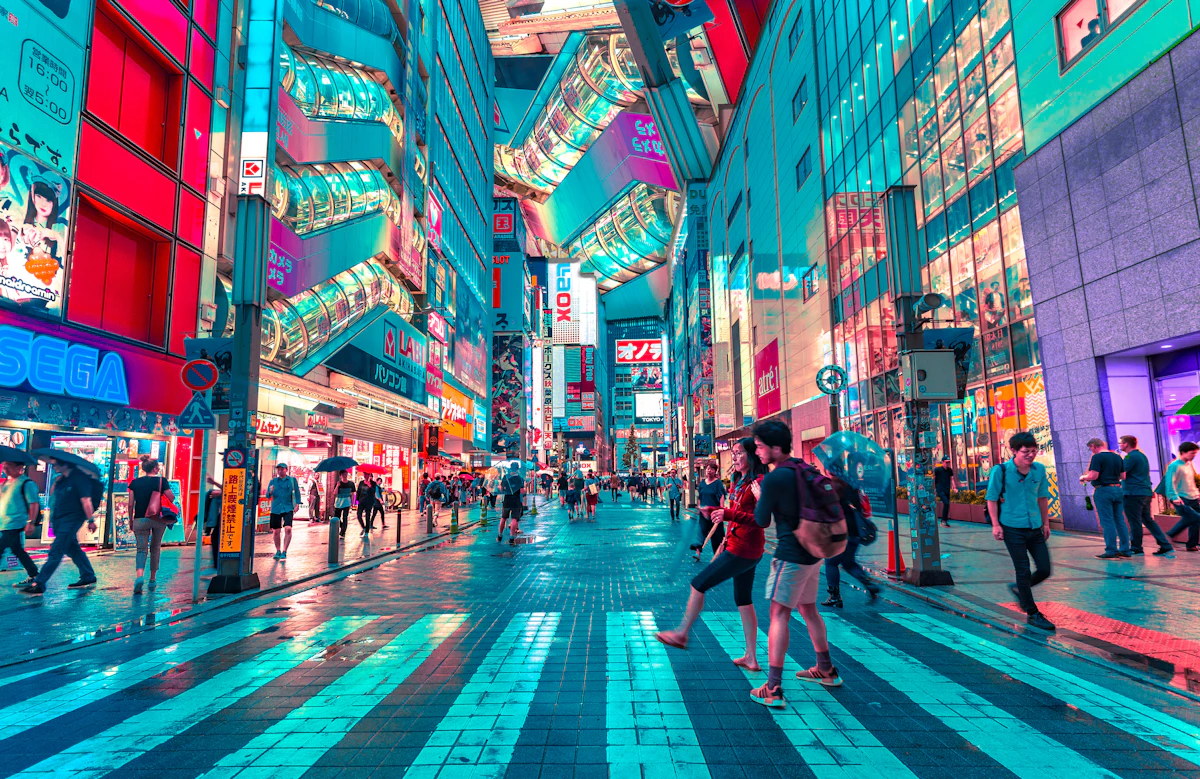
Shibuya — Best for Energy & Youth Culture
Shibuya is the crossing everyone photographs. But it's also one of Tokyo's most dynamic shopping and food districts.
Staying in Shibuya puts you close to Harajuku (5-minute walk), Omotesando (10-minute walk), and Daikanyama and Nakameguro — two of Tokyo's most beautiful residential neighbourhoods, perfect for a slow morning walk.
Hotels around Shibuya are slightly more expensive than Shinjuku, but the access to the west-side neighbourhoods is worth it for visitors who care about fashion, design, and food.
Asakusa — Best for Culture & Value
If you want traditional Tokyo — Senso-ji temple, rickshaws, craft shops, the smell of incense — Asakusa is it.
It's also significantly cheaper than Shibuya and Shinjuku. Business hotels in Asakusa run ¥9,000–¥14,000/night. The neighbourhood is genuinely atmospheric in the early morning before the tourist crowds arrive.
The downside: Asakusa is in the east of the city, which means more travel time to get to the west-side neighbourhoods. If your itinerary is east-heavy (Akihabara, Ueno, Skytree), it's ideal. If you're spending most time in Shibuya and Harajuku, you'll be on the train a lot.

Akihabara — Best for Tech & Anime Lovers
Akihabara is a very specific neighbourhood for a very specific type of visitor. If electronics, manga, anime, video games, and maid cafes are your thing — this is your home base.
If they're not, staying here is fine but slightly misaligned. You'd be spending travel time getting to the parts of Tokyo that matter more to you.
Prices are reasonable — similar to Asakusa. And it's extremely well-connected by the Yamanote Line.
Shimokitazawa — Best for the Real Tokyo
This is where you go when you want to stop being a tourist.
Shimokitazawa is where Tokyo's artists, musicians, and writers live. It has the city's best vintage clothing scene, the best jazz bars, a dozen tiny theatres, and coffee shops so good that people travel across the city just for them.
It's not central. From Shimokitazawa, getting to Asakusa takes 40 minutes. But if you're spending more than 5 days in Tokyo, or if you've been before, this is where you learn what Tokyo actually feels like to live in.
Quick Verdict
- First trip, want everything accessible: Shinjuku (the classic answer, and still right)
- Fashion, design, west-side focus: Shibuya
- Culture, tradition, better value: Asakusa
- Tech/anime/games primary interest: Akihabara
- The real Tokyo, longer trip: Shimokitazawa
Don't do this
Don't stay near Tokyo Station unless you specifically need bullet train access. It's a good transit hub but a poor base for experiencing the city. The area is dominated by business travellers and has very little of what makes Tokyo exciting.
FAQ
Surprisingly yes. The train system is complex but thoroughly signposted in English. Google Maps works extremely well in Tokyo. And the Japanese concept of service means that if you're lost and ask anyone who works at a station, they will go out of their way to help you.
For a two-week trip, splitting between two neighborhoods makes sense — 7 nights in Shinjuku for the first week, 7 nights in Asakusa or Shimokitazawa for the second. For a week or less, stay in one place. Moving accommodation costs time and energy that's better spent exploring.
Yes, once. It's a genuinely unique experience and modern capsule hotels are considerably more comfortable than photos suggest. Good options in Shinjuku and Akihabara cost ¥3,500–¥6,000/night. Do it for the experience, not as your primary accommodation strategy for a week.