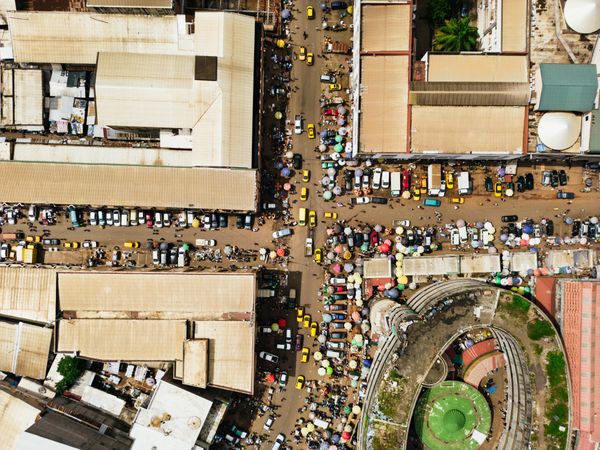
Accra has a standard tourist circuit: Kwame Nkrumah Mausoleum, Labadi Beach, the National Museum, Oxford Street in Osu for dinner. All fine. But Accra's real character lives in the older, denser, less-polished parts of the city — and in a handful of institutions and experiences that its own residents treasure but rarely make the guidebooks.
Ghana's "Year of Return" and "Beyond the Return" campaigns have brought a wave of diaspora visitors — and with them, growing local knowledge about what makes Accra genuinely special. This guide is for those who want the real city.

Accra's real character lives beyond the tourist circuit — in its fishing quarters, boxing arenas, and markets.
In This Article
1. Jamestown — Accra's Historic Soul
Jamestown and Usshertown are Accra's oldest neighbourhoods, built around the 17th-century British and Dutch forts that still stand at the seafront. This is the original city — dense, colourful, loud, and completely unlike the polished Osu or Airport Residential areas most tourists inhabit.
The James Fort Lighthouse (open to visitors, small fee) gives a panoramic view of the Atlantic coastline and the fishing harbour below — canoes painted in bright colours heading out at dawn and returning by midday. The streets around the fort are full of traditional boxing gyms, barbershops with painted sign boards, and chop bars serving local food for under GHS 30.
- Best time: Early morning (fishing boats returning) or late afternoon
- Getting there: Bolt/Uber — 15–25 mins from Osu
- Cost: Lighthouse GHS 20; walking tours from USD $15–25
- Walking tours available through local guides — highly recommended for context
2. Artists Alliance Gallery
Ghana has one of the strongest contemporary art scenes in West Africa, and the Artists Alliance Gallery in Osu is its most important commercial showcase. Established Ghanaian and pan-African artists, rotating exhibitions, and a permanent collection that traces decades of Ghanaian art.
Unlike tourist craft markets, this is where serious Ghanaian art collectors shop and where internationally exhibited artists show their work. If you want to bring back something genuinely significant from Ghana — not a kente placemat — this is where to look.
- Location: Ring Road East, Osu
- Entry: Free
- Hours: Monday–Saturday 9am–6pm
3. Makola Market
Every tourist goes to the Accra Arts Centre for souvenirs. Almost none go to Makola Market, which is where Accra actually shops. One of West Africa's largest urban markets — fabrics, electronics, household goods, fresh produce, food stalls — it's everything the curated tourist market is not. Busy, sensory, and entirely genuine.
- Location: Central Accra, near Kinbu Road
- Best for: fabrics (wax prints, kente), food market experience, people-watching
- Tips: Go with a local if possible; keep bags close; bargaining is expected
- Best time: Tuesday–Saturday morning
Accra's markets are the heartbeat of the city — loud, colourful, and completely unlike the tourist version.
4. Nima Neighbourhood
Nima is one of Accra's oldest and most densely populated neighbourhoods — a predominantly Muslim community with a distinct cultural identity, incredible street food, and a social energy that feels nothing like the sanitised Airport Residential or Osu. Suya, waakye, and grilled tilapia available at every corner from early morning.
- Location: Central Accra, north of Accra Mall
- Best for: authentic street food, local market, cultural immersion
- Go with: a local guide or friend for the best experience
- Best time: Morning (food market at its best) or early evening
5. Cedi Bead Factory (Krobo)
About 80km from Accra, the Cedi Bead Factory in Krobo is where Ghana's famous recycled glass beads are made — a tradition stretching back centuries. You can watch artisans at work, buy directly from the workshop at source prices, and understand the cultural significance of beads in Ghanaian and broader West African culture. Worth a half-day trip from Accra.
- Distance from Accra: ~80km, 1.5–2 hour drive
- Entry: Small fee, usually included in a tour
- Buy: Beads from GHS 20; finished jewellery from GHS 80+
- Best booked: Through a local tour operator or hired driver
6. La Beach — The Local's Beach
While Labadi Beach gets all the tourist attention, La Beach (also called La Pleasure Beach) is where Accra's locals actually spend their Sundays. Less curated, more authentic — local food vendors, live music setups, and a fraction of the entry cost. The ocean is identical.
- Location: La, just east of Accra city centre
- Entry: GHS 20–40 (significantly less than Labadi)
- Best time: Sunday afternoon for the full social atmosphere
- Bring: Cash for food vendors (grilled fish, kelewele, fresh coconut)
7. Bukom Boxing Arena
Jamestown's Bukom neighbourhood has produced more world champion boxers per square kilometre than almost anywhere else in Africa. On fight nights — which happen regularly, announced on local radio and posted on community boards — Bukom Boxing Arena is one of the most electric sporting experiences in West Africa. Completely unpretentious, deeply local, and unforgettable.
- Location: Bukom Square, Jamestown, Accra
- Entry: GHS 50–200 depending on the card
- Best for: sports fans, anyone interested in Ghanaian culture beyond the tourist trail
- Check dates: Local Ghanaian boxing promoters post on Facebook and Instagram
8. Practical Tips for Exploring Accra
Use Bolt for transport
Bolt works well across Accra. Avoid negotiating with unmarked taxis — metered ride-hailing is safer and transparent.
Carry small denomination cedis
Most market vendors and street food spots only accept cash. Keep GHS 50–200 accessible — not in a visible wallet.
Go with local knowledge when possible
Areas like Jamestown and Nima are completely safe in daytime with a local guide. The context they provide transforms the experience.